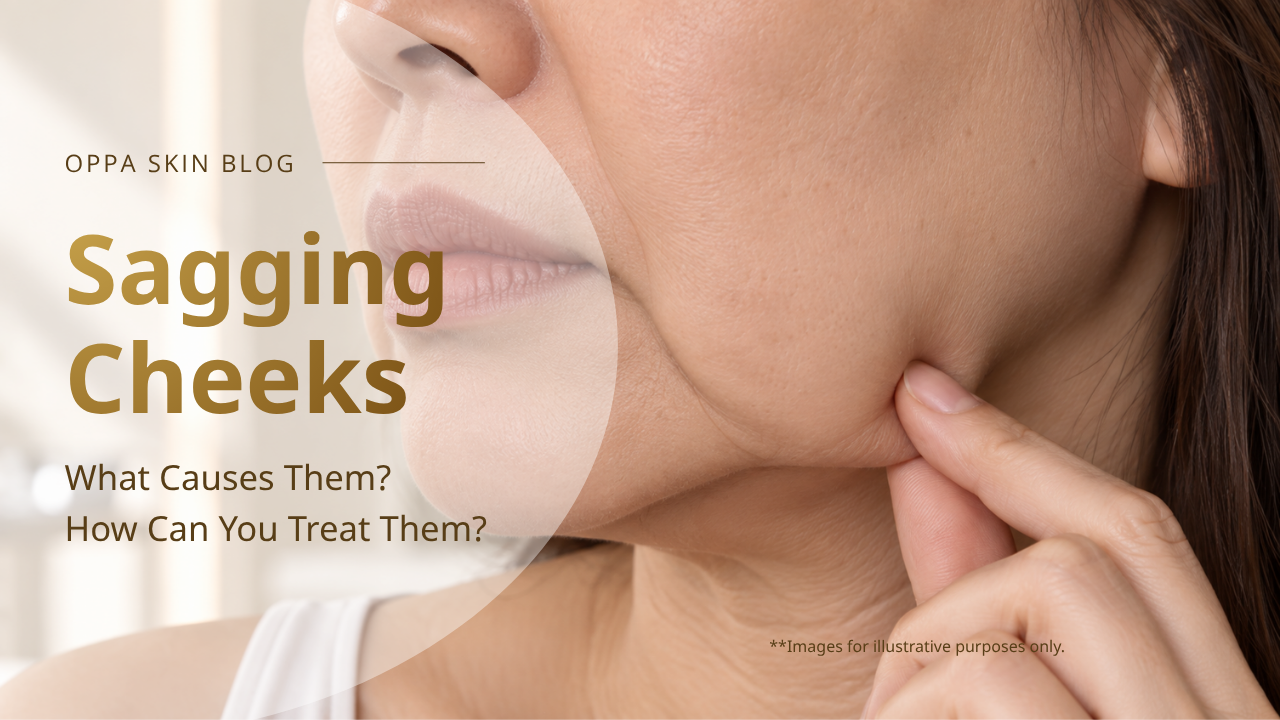
When you start noticing your cheeks sagging or drooping, especially when looking in the mirror while looking down or in low-angle selfies, this change is often collectively referred to as sagging cheeks. Many people mistakenly believe it’s solely a matter of aging and think there’s no solution other than to let it pass. However, sagging cheeks are actually caused by multiple factors, including changes in collagen and elastin in the skin layers, movement of subcutaneous fat, facial structure, and daily lifestyle habits. Therefore, to properly care for or correct sagging cheeks, the important thing isn’t choosing a specific device or program first, but rather identifying “which facial layer is the primary cause” in order to select an approach tailored to each individual’s problem.
What are sagging cheeks or drooping cheeks?
Drooping cheeks, or sagging cheeks, is a term used to describe a condition where the skin and tissue in the cheek area appear loose, altering the cheek line and facial contour. The area around the corners of the mouth or the jawline may become more prominent. This is related to changes in multiple structural layers, including the skin, fat, fascia, ligaments, and facial bone, and is not solely caused by a decrease in collagen in the skin.
What do sagging cheeks look like?
A common characteristic of sagging cheeks is that the cheek tissue in the middle and lower part of the face appears to shift downwards from its original position. This makes the previously smooth jawline less defined, and small bulges or bumps may appear around the corners of the mouth and extending to the jawline. Some people notice this more clearly when viewed from the side, while speaking, or when moving facial muscles. Sagging cheeks may also be accompanied by more pronounced nasolabial folds, enhanced marionette lines, and looser or less firm skin in the cheek area compared to other areas. These characteristics can result from a combination of factors, including skin laxity, shifts in the fat layer, and loss of volume in the mid-face.
What is the difference between sagging cheeks and chubby cheeks?
Sagging cheeks and full cheeks may look similar, but they describe different features. Sagging concerns the looseness and position of tissue, while fullness concerns its volume. The main differences are outlined below:
| Feature | Sagging Cheeks | Full Cheeks |
|---|---|---|
| Main factors | Changes in skin, supporting tissue, fat, and facial structure. | The volume of fat and tissue, along with the facial proportions of each individual. |
| Characteristics observed | The cheeks appear saggy, there may be a pouch along the jawline, and some parts of the face may have reduced volume. | The cheeks appear full or voluminous without necessarily being saggy. |
| Common age groups | It often becomes more noticeable with age, but it can also occur in younger people. | It can be found starting from young adulthood. |
| Related factors | Age, genetics, sunlight, weight changes, and facial structure. | Genetics, facial structure, and fat distribution. |
| Clinical approach | Assess the degree of sagging and the area of volume loss before choosing a treatment method. | Assess which tissue is causing the fullness and whether treatment is necessary. |
What causes sagging cheeks?
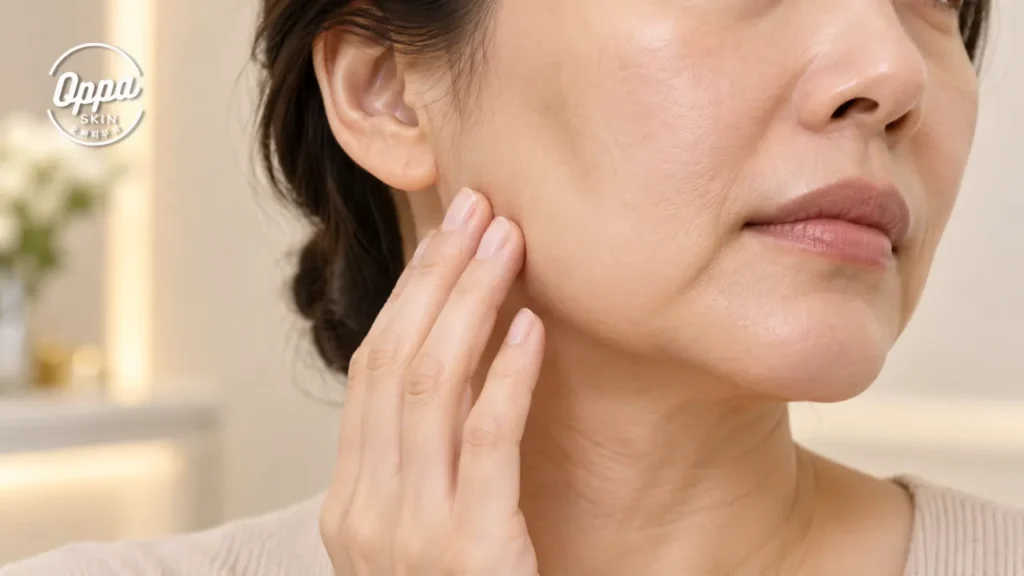
Sagging cheeks are the result of multiple changes occurring simultaneously, not just a problem with a single skin layer. Therefore, a facial examination should consider everything from skin quality and fat quantity and location to volume and bone structure.
Loss of collagen and elastin
Collagen and elastin are important proteins that act as a supporting network for the skin, helping to maintain its elasticity and firmness. As we age, the body naturally produces less collagen and elastin, generally starting from around age 25 and accelerating after the ages of 30-40. As this skin-supporting network weakens, the skin in areas like the cheeks begins to sag and droop due to gravity.
Changes in Facial Fat Position
Facial fat is divided into several layers, both superficial and deep. As we age, the volume and location of this fat may change differently, along with changes in the supporting tissue. This can cause the upper cheeks to appear sunken, while some areas of the lower face may look fuller or saggy. This is not simply because all the fat from the cheekbones has shifted down to accumulate in the jaw area.
Loss of volume and changes in facial structure
In addition to changes in the location of fat, the volume of fat and some facial bones also decreases with age, especially the cheekbones and jawbone, which may undergo partial degeneration. When the structure that once supported the upper skin layer loses volume, the skin covering it lacks support and sags more.
Significant Weight Gain or Loss
Rapid weight changes, whether significant gains or losses, can affect the firmness of the skin around the cheeks. If weight is significantly gained, the skin stretches to accommodate the increased fat volume. When weight is lost rapidly afterward, the stretched skin may not be able to return to its firm state quickly enough, leading to sagging skin around the cheeks and jawline. This is especially true for older individuals whose skin elasticity already decreases.
Sunlight and behaviors that accelerate skin aging
Unprotected cumulative sun exposure contributes to photoaging, or ultraviolet radiation damage, which is associated with wrinkles and decreased skin elasticity. Smoking is another factor that contributes to premature skin aging. Therefore, sun protection and avoiding smoking should be combined with other measures. Getting enough rest and drinking enough water are part of maintaining good health, but it shouldn’t be expected that increasing water intake will directly lift cheeks or correct facial sagging.
Genetics and facial structure
Genetics plays a significant role in skin thickness, natural collagen levels, and facial structure. Therefore, it’s not surprising that some people start experiencing sagging cheeks at a young age, while others of a similar age still have very firm skin. This explains why, even with similar skincare routines and lifestyles, the time it takes for cheek sagging to become noticeable varies from person to person.
How do sagging cheeks affect facial shape?
When the cheeks begin to sag and change position, it often affects the overall appearance of the face in several ways, as follows:
A Less Defined Jawline
As cheek tissue moves lower and accumulates around the jawline, the smooth facial contours that once extended from the ear to the chin become less defined, especially when viewed from the side or from a three-quarter angle. This makes the face appear less sharp and defined than before.
Jowls
In some people, sagging cheek tissue may accumulate into lumps or pouches on the sides of the jawline, near the corners of the mouth, or under the lower jaw. This is more noticeable when smiling or talking and often makes the face appear to have unwanted excess tissue.
More Prominent Nasolabial Folds and Marionette Lines
When the volume of the fat layer in the cheekbone area decreases and shifts downwards, it often makes the nasolabial folds (the lines running from the side of the nose to the corners of the mouth) appear deeper and more prominent. Marionette lines (the lines extending from the sides of the mouth down to the chin) may also become more pronounced.
A Less Firm Facial Appearance
As cheek lines, jawline, and wrinkles change, some people may feel their face looks less firm or more tired. The degree of change and concern varies from person to person, so it’s important to discuss the areas to be treated and the expected results before choosing a program.
What are some ways to treat sagging cheeks?
Sagging cheeks are caused by a combination of factors. Therefore, treatment approaches should be tailored to the underlying cause and the degree of sagging in each individual. Treatment approaches can be divided as follows:
Skin care and lifestyle changes
Consistent sun protection, using a moisturizer suitable for your skin type, and avoiding smoking are fundamental to age-appropriate skincare, along with a varied diet and overall health. However, external skincare alone cannot completely realign sagging tissue or replace lost volume; therefore, the goals of skin quality should be separated from structural lifting.
Skin Tightening Program
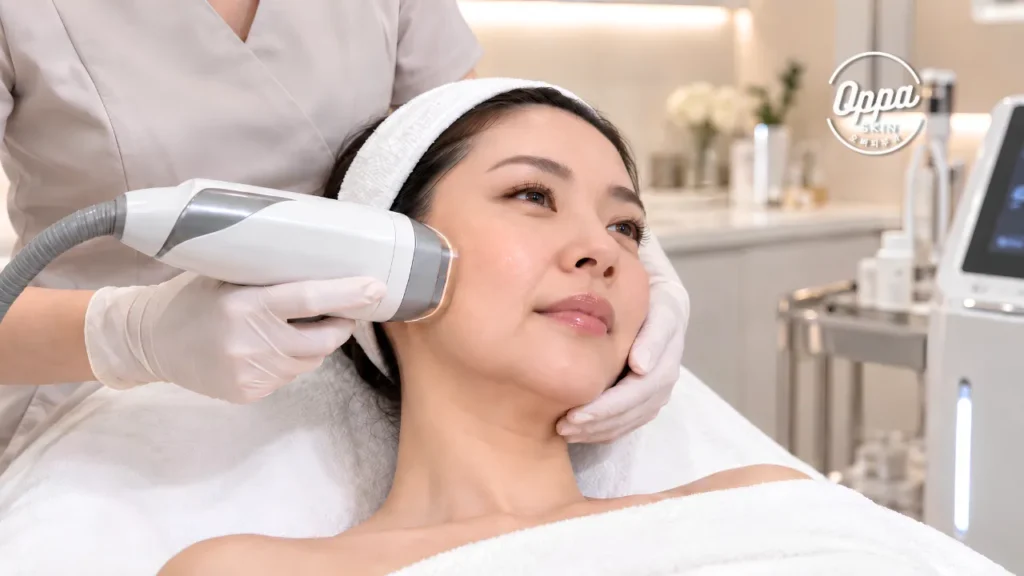
For those experiencing more pronounced cheek sagging and seeking non-surgical skin tightening treatments, doctors may consider skin tightening technologies that use energy to stimulate collagen production in the deeper layers of the skin. These include programs like Ultraformax, which uses high-frequency ultrasound (HIFU) to deliver energy to the optimal skin layers to stimulate new collagen production, and XTherma, which utilizes radiofrequency (RF) technology to further tighten the skin. The doctor will assess which technology is best suited to the individual’s level of sagging and skin condition.
Collagen Stimulation Program
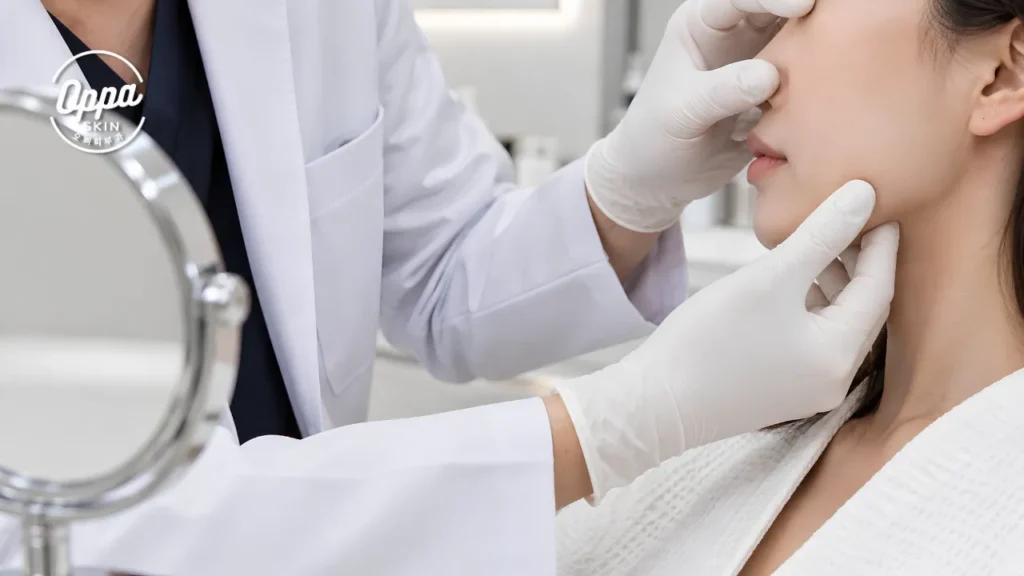
Collagen stimulants, or biostimulators, are a group of products that stimulate collagen production. Each type has different compositions, methods of use, and indications. The Sculptra program is one such product that contains Poly-L-Lactic Acid (PLLA) as a key ingredient. In individuals with changes in skin quality or tissue volume, along with sagging, a physician may consider a Biostimulator or Sculptra program at OPPA SKIN CLINIC, depending on the product and goals, assessing the area, dosage, and follow-up plan on an individual basis. Responses are gradual and vary. Collagen stimulation does not directly mean lifting the jowls or restoring fat layers, and it doesn’t necessarily add volume to everyone with sagging cheeks, especially in areas that are already full. The physician must also consider the impact on facial proportions.
What Do Doctors Assess Before Treating Sagging Cheeks?
Because each person’s sagging cheeks have different causes and degrees of looseness, a doctor must always conduct a thorough individual facial assessment before recommending any treatment plan. The issues typically considered include:
- Level of skin sagging: Assess the degree of skin sagging in the cheek area and the remaining elasticity to determine which firming method should be prioritized.
- Location and volume of facial fat: Check how much fat has shifted and which areas have lost volume, causing the skin to lack support.
- Facial bone structure and jawline: Assessing the structure of the cheekbones and jawbone, which affects the direction in which the cheek tissue sags in each individual.
- Skin quality: Skin with varying thickness and elasticity responds differently to different treatment approaches. Therefore, a doctor must assess the actual skin condition before choosing a method.
- Age, lifestyle, and related behaviors: such as sun exposure and past weight changes, may be accelerating factors that warrant additional advice in conjunction with primary care.
- Medical history and contraindications: For the safety of patients, physicians will always inquire about pre-existing conditions, medications currently being used, and allergies to drugs or substances before considering treatment options.
- Previous cosmetic treatments: For example, fillers, collagen stimulants, thread lifts, skin tightening devices, or surgeries, including the products, area, and time of treatment. Please provide this information to your doctor if available.
- Goals and Expectations: Discuss your primary concerns—jowls, jawline, deep wrinkles, or sunken skin—in order to define goals that align with the limitations of each method.
Why choose OPPA SKIN CLINIC for treating sagging cheeks?
At OPPA SKIN CLINIC, we plan treatments for sagging cheeks considering both tissue structure and the individual’s desired improvements. Because those concerned about an undefined jawline may have different factors than those with sunken cheeks and sagging, an assessment helps determine which areas each person should prioritize addressing first. If skin sagging is the primary factor, the doctor will consider Ultraformax or XTherma programs as suitable. Those with accompanying skin quality or volume loss may consider Biostimulator or Sculptra programs, depending on the indication and nature of the problem. It is not necessary for everyone to use the same devices and injections. In cases with multiple contributing factors, the physician will explain the goals and sequence of care, along with information on limitations, side effects, and aftercare, so that the patient understands the plan before making a decision. If the problem is beyond the scope of what this approach can address, the physician may recommend further evaluation. Those concerned about sagging cheeks, drooping cheeks, or puffy cheeks can consult OPPA SKIN CLINIC to assess the cause and determine the most suitable options for their facial condition and goals. Results and the timeframe for seeing changes vary from person to person.
Sagging Cheeks: Key Takeaways
Sagging cheeks are caused by a combination of factors, including loss of collagen and elastin, changes in the position of subcutaneous fat layers, loss of volume and facial structure, significant weight changes, sun exposure, and behaviors that accelerate skin aging, as well as individual genetics. Therefore, there is no one-size-fits-all solution for sagging cheeks. Skin care and lifestyle changes are fundamental steps in slowing down skin aging, but for those with noticeable sagging cheeks, consulting a doctor to assess the underlying cause before deciding on treatment will help choose the most appropriate and targeted approach, rather than relying solely on self-care.
Frequently Asked Questions
Can sagging cheeks tighten up on their own?
Generally, sagging cheeks caused by the loss of collagen and elastin and displacement of fat layers due to aging usually cannot completely regain their firmness on their own, as this is a continuous process of skin structure deterioration. Skin care and lifestyle changes, such as sun protection and adequate hydration, can help slow further sagging to some extent. However, if cheek sagging is already pronounced, additional medical treatment is often required to stimulate collagen production or improve skin firmness.
Facial exercises: Can they help reduce sagging cheeks?
Face yoga is a method that has garnered some interest, based on the concept of training facial muscles to improve firmness. However, current medical data confirming its effectiveness in reducing sagging cheeks is limited. This is because sagging cheeks are mostly related to the superficial skin and fat layers rather than directly to muscles. Those seeking targeted treatment for sagging cheeks should consult a doctor to assess the cause and determine the most appropriate approach.
Do sagging cheeks really make your face look older?
Sagging cheeks can alter the jawline, nasolabial folds, and facial proportions, making some people feel their face looks older. However, perceptions vary from person to person, and cheek shape alone cannot be used to judge age or health. Care should begin by addressing the areas of concern and the desired improvements.
Back to Articles