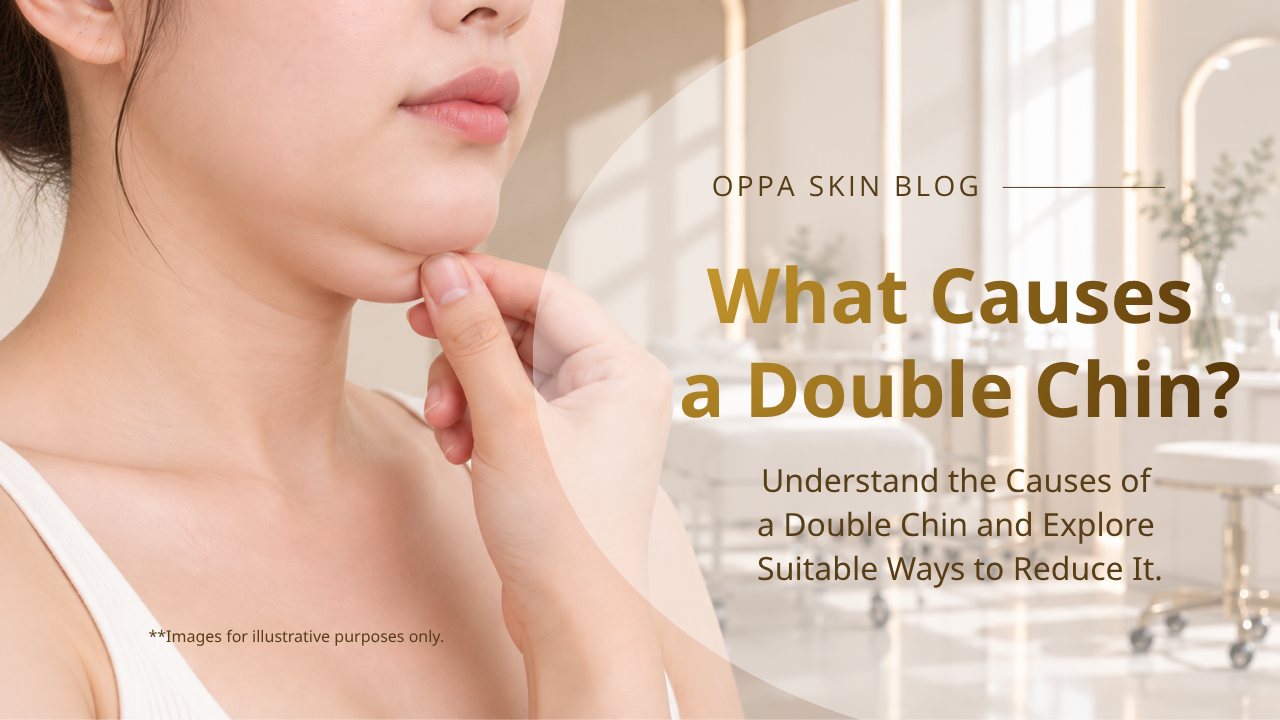
Many people have heard that “a double chin is caused by obesity,” leading them to believe that if they lose weight, the double chin will disappear. However, in reality, a significant number of patients who consult about a double chin have a normal weight or have lost a considerable amount of weight, yet their double chin persists. The question then arises: what exactly causes a double chin, and why do the treatments differ for each person? When looking in the mirror or taking side photos and seeing excess fat under the chin, many immediately assume it’s due to weight gain or excess fat. But from a doctor’s perspective, a double chin isn’t caused solely by fat.
What is a double chin?
A double chin refers to the fleshy bulge or protrusion under the chin. When viewed from the front, and especially from the side, it may create a fold or layer under the chin, giving the appearance of a double chin. This is a condition where the tissue or skin under the chin sags or increases in volume, creating a second line visible just below the jawline, resulting in a less defined chin line. A double chin doesn’t always have a single cause but is the result of several contributing factors in each individual. Therefore, to treat it effectively, a doctor must first assess the underlying cause of your double chin in order to develop an appropriate treatment plan.
Four types of double chin, categorized by common causes
Based on the assessment of patients consulting about double chin, the main causes can be categorized into four types, although some individuals may have characteristics of more than one type.
Type 1: Double chin due to fat accumulation under the chin
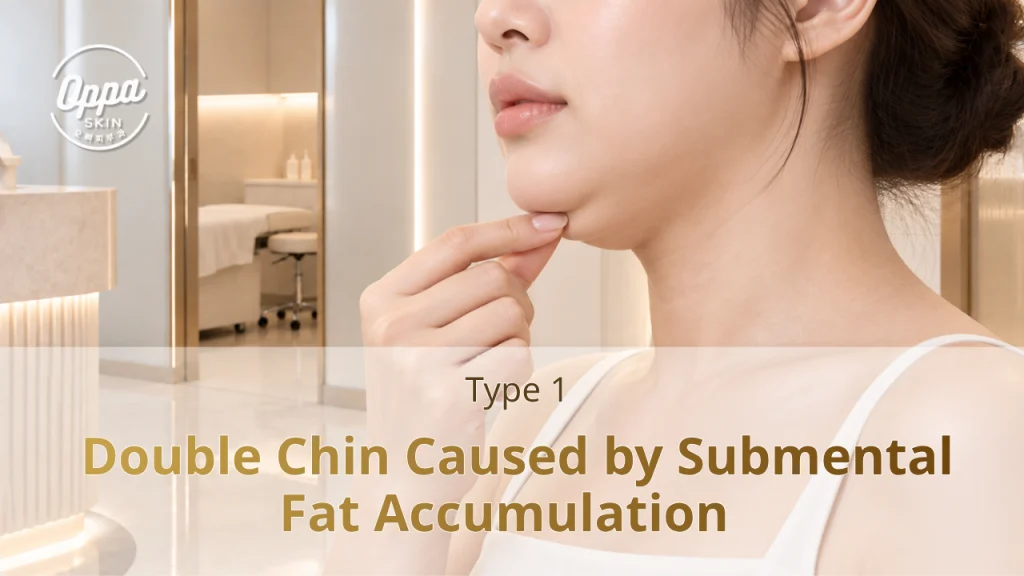
This type of double chin is caused by an excessive accumulation of fat under the skin, often feeling soft and thick to the touch. It’s also associated with genetic factors or individual fat distribution patterns; that is, some people tend to accumulate fat more easily in the chin and neck area, even if their overall body mass index is within the normal range. Therefore, this type of double chin often appears in early adulthood and doesn’t always disappear with weight loss.
Treatment approaches typically considered by doctors: Doctors will assess submental fat along with skin firmness and chin proportions to determine the suitability of targeted fat treatment. For the Fat Bomb Premium program at OPPA SKIN CLINIC, doctors will first evaluate whether the program’s methods align with the identified problems, and explain any limitations and potential side effects before a decision is made to proceed with the treatment.
Type 2: Double chin due to sagging skin with aging
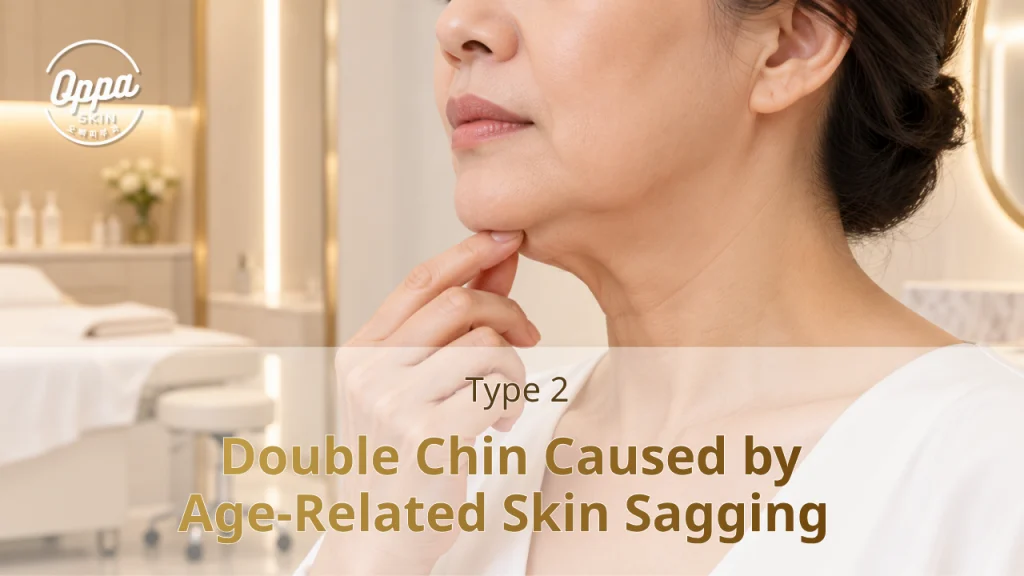
These double chins are not primarily caused by excess fat, but rather by the loss of elasticity in the skin under the chin due to aging. As collagen and elastin production in the skin naturally decreases, the skin can no longer maintain its firmness and conform to the facial contours as before, resulting in sagging skin and a double chin. This is often accompanied by other signs of facial sagging, such as deeper nasolabial folds or a less firm appearance of the skin.
Treatment approaches typically considered by doctors: If skin sagging is the primary factor, doctors at OPPA SKIN CLINIC will assess the degree of sagging and the areas requiring treatment before determining the suitability of the Ultraformax or XTherma program, based on the technology and indications of the equipment used. The goals for skin tightening and limitations of each option will be explained.
Type 3: Double chin due to chin and facial structure
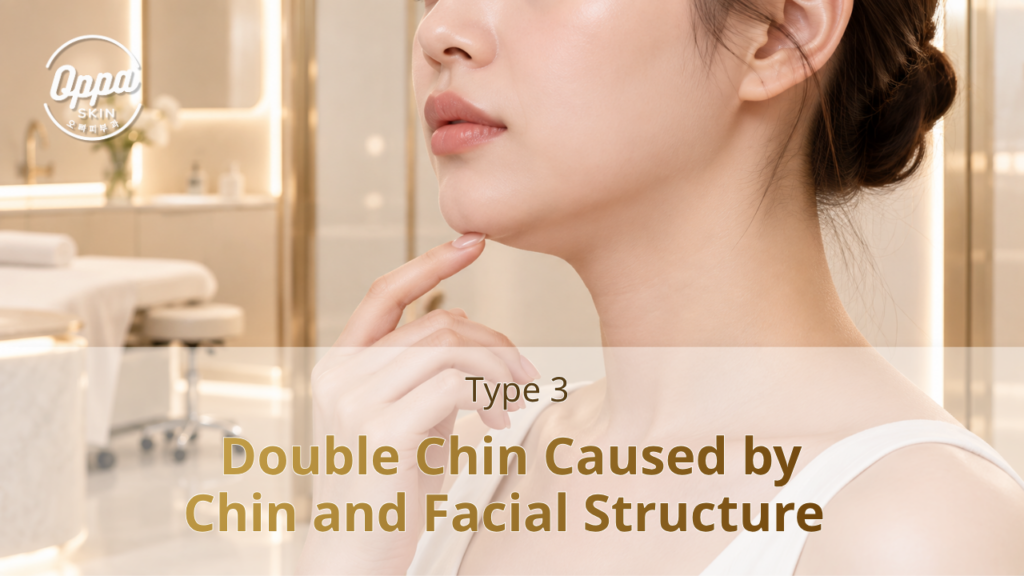
Some people develop a double chin at a young age, even if they are not overweight and have firm skin. This is often due to congenital facial structure, such as a short chin, receding chin, or an indistinct angle between the chin and neck. Even with normal levels of fat and skin, they may appear to have a double chin because there is no prominent chin bone to help define the jawline.
Treatment approaches typically considered by doctors: At OPPA SKIN CLINIC, doctors will assess the proportions of the chin and face along with fat and skin characteristics. If chin structure is the primary factor, it will be explained that fat reduction or skin tightening alone may not be sufficient, and options for chin proportion adjustment will be considered, or further evaluation may be recommended as appropriate. If skin sagging is also present, additional skin treatments will be considered. It’s important to note that skin tightening does not directly address a receding chin bone structure.
Type 4: Double chin due to weight and lifestyle habits
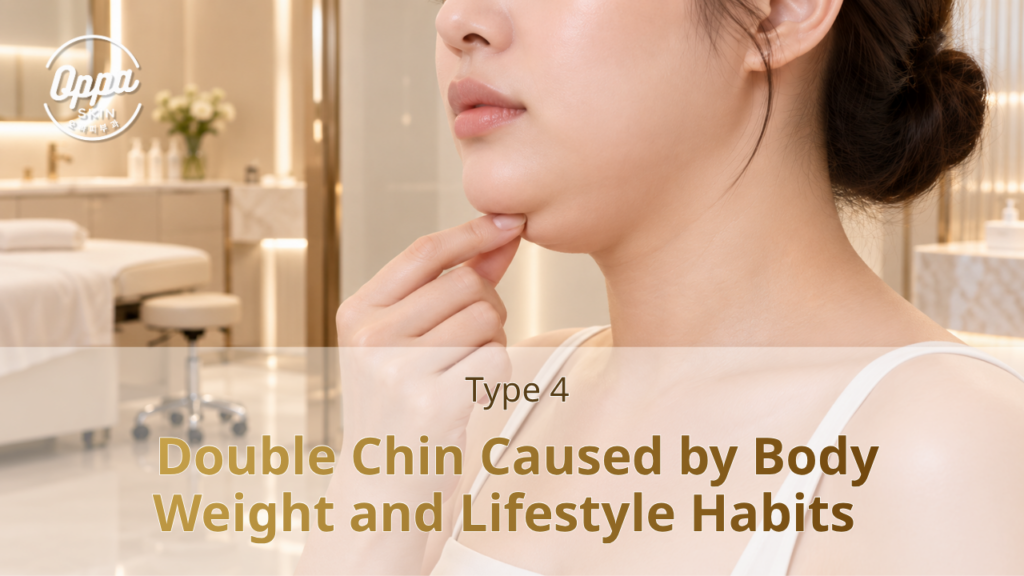
The last type of double chin is directly related to overall body weight. When weight increases, excess fat is distributed and accumulates throughout the body, including under the chin. In addition, daily habits such as prolonged periods of looking down at a phone, improper sitting posture, or sleeping in positions that regularly compress the neck can also accelerate sagging of the skin under the chin. This type of double chin tends to change more noticeably with weight than the others.
Treatment approaches typically considered by doctors: If overweight, treatment may begin with adjusting eating habits and physical activity. If concerns about a double chin persist after weight changes, doctors at OPPA SKIN CLINIC will assess whether it’s fat, sagging skin, or other contributing factors before considering further programs. For those at a healthy weight, there’s no need to lose weight simply because of a visible double chin.
How to observe a double chin before seeking consultation
Observing the features under your chin can help you articulate your concerns more clearly to your doctor, but it is not a self-diagnosis or a guide to choosing a procedure. Consider the following points:
- Appearance of the skin and texture under the chin: Observe whether it appears full, has skin folds, or has both characteristics.
- Side profile of the chin: Does your chin appear short or receding, and how long have you noticed this characteristic?
- Relationship with weight: Does the area under the chin change when weight is gained or lost?
- Changes over time: These become more noticeable with age, after weight loss, or when new swelling develops.
Squeezing the tissue under the chin or examining photographs cannot fully differentiate between fat, skin, and other structures. Therefore, it is advisable to have a doctor evaluate the area before choosing a treatment program.
How Much Can Diet and Exercise Help Reduce a Double Chin?
Dietary and exercise adjustments may help reduce some chin fat in individuals with weight-related fat accumulation, but the degree of change varies from person to person. It’s not possible to determine exactly how much a double chin will be reduced.
If there is sagging skin or a related chin structure, weight loss alone may not result in the expected change under the chin, and excess skin may remain after weight loss. Therefore, treatment planning should consider the actual factors found, without concluding that genetically-related fat accumulation always requires a cosmetic procedure.
When Should a Doctor Assess Swelling Under the Chin Before Treatment?
If you notice a lump under your chin or neck that is growing, hard, immobile, painful, red, warm, or persists for more than two weeks, you should see a doctor to determine the cause. Do not assume it’s just a double chin due to fat or sagging skin and immediately opt for a cosmetic procedure.
Why choose OPPA SKIN CLINIC for your double chin treatment?
At OPPA SKIN CLINIC, we begin by understanding your primary concern, whether it’s fullness under the chin, sagging skin, or an undefined jawline. This information is then incorporated into a doctor’s assessment to determine a personalized treatment plan. The doctor will take a detailed medical history and evaluate your chin fat, skin elasticity, and facial proportions before considering clinic options such as Fat Bomb Premium, Ultraformax, or XTherma, based on the method used and the findings. If multiple factors are present, the doctor will explain the goals and necessity of each approach, emphasizing that multiple programs aren’t necessary for everyone. Before starting treatment, we prioritize explaining the limitations, potential side effects, and post-treatment care to ensure you have the information to make an informed decision. If the problem involves chin structure or requires further investigation, the doctor may recommend evaluation of those aspects before selecting a program. Individuals concerned about a double chin or sagging jawline can consult OPPA SKIN CLINIC for an assessment of the cause and a personalized treatment plan. Please note that results depend on the method used, tissue condition, and individual factors.
Double Chin: Key Takeaways
Double chin is caused by a variety of factors and can be categorized into four main types: fat accumulation under the chin, sagging skin due to aging, facial and chin structure issues, and weight and lifestyle factors. Each type has a different origin, so there is no one-size-fits-all solution for reducing a double chin. Starting by observing your own double chin characteristics using the guidelines in this article will help you choose the right doctor to consult and plan a more targeted treatment.
Frequently Asked Questions
Is a double chin caused solely by obesity?
Not always. Weight gain is only one contributing factor. A double chin can also be associated with sagging skin, jaw structure, or a genetic predisposition to fat accumulation. Even people who are at a normal weight can have a double chin.
What is the difference between a double chin caused by fat and a double chin caused by sagging skin?
A double chin caused by fat is typically a soft, thick, palpable mass and is often associated with weight or fat accumulation patterns. A double chin caused by sagging skin, on the other hand, is usually loose but less thick skin and is often accompanied by other signs of facial sagging. Accurate differentiation of the cause requires a medical evaluation. Both conditions can occur together, so you shouldn’t rely solely on self-examination for fat reduction or skin tightening.
Can submental fat (fat under the chin) be reduced on its own?
Submental fat may partially decrease as overall weight and fat are reduced, but results vary from person to person. If a double chin persists, it may be related to remaining fat, sagging skin, or the chin structure itself. Further evaluation is possible, and a cosmetic procedure is not necessary in all cases.
Do I need to choose a double chin reduction program before my consultation?
It’s not necessary. You can inform the doctor at OPPA SKIN CLINIC about your areas of concern and goals beforehand. The doctor will assess and explain the relevant options, including the limitations of each method, to help you make an informed decision.
Back to Articles