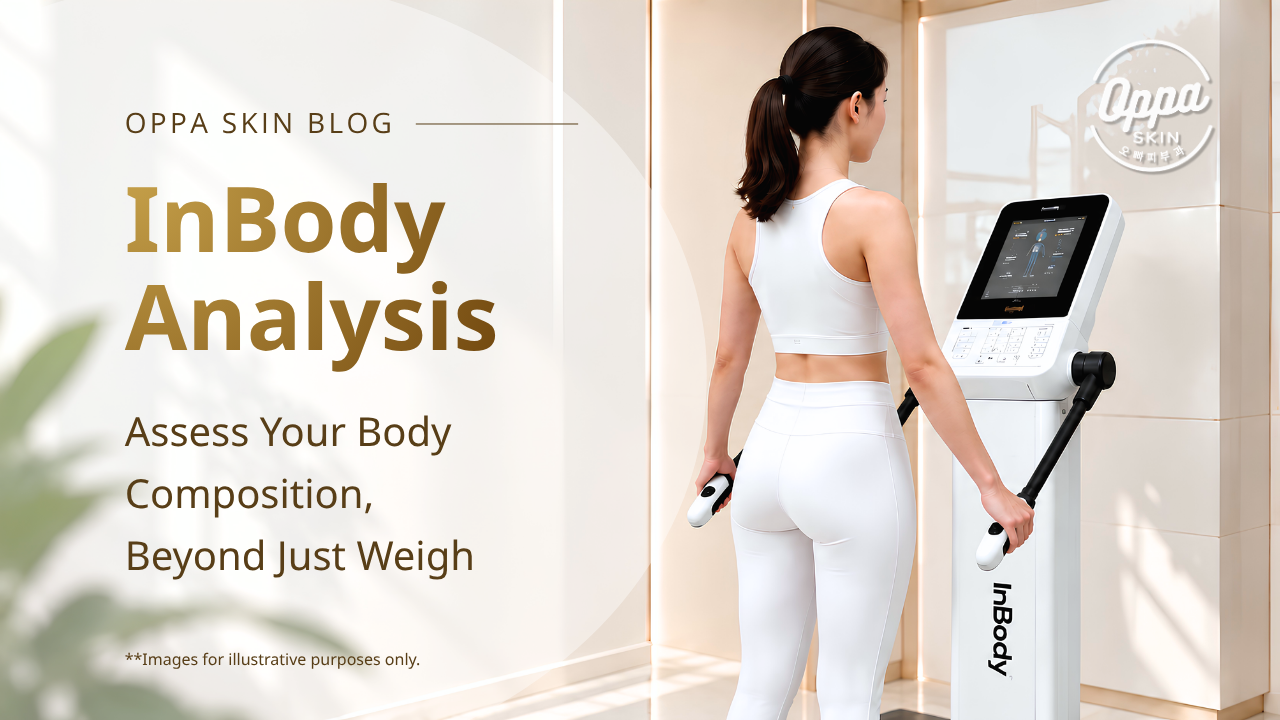
Many people who are determined to maintain their physique often rely solely on the number on the scale as a measure of success. However, weight loss or gain doesn’t tell the whole story. Weight lost might be muscle, not fat, and weight gained might be due to increased muscle mass and strength. This is why InBody body composition analyzers play a crucial role, providing a more detailed picture of the body than a single weight reading. This article will explain what InBody is, how it works, and its benefits for long-term health and fitness planning.
What Is InBody?
InBody is a body composition analyzer that uses bioelectrical impedance analysis (BIA) to estimate components such as muscle, fat, and water, without blood tests or invasive procedures. It is widely used in healthcare facilities, fitness centers, and health clinics to give doctors and clients more detailed information than a standard scale.
How Does InBody Work?

The InBody machine works by passing a safe, low-grade electrical current through the body. This current travels through different tissue types at varying speeds and with different impedances. Tissues primarily composed of water and muscle conduct electricity better, while fat has higher electrical resistance. When a patient stands on the foot pedals and holds the handles, the system sends electrical currents at various frequencies through different parts of the body, arms, legs, and torso. The measured impedance values are then processed along with personal data such as height, age, and gender to calculate a detailed body composition report. The entire process is quick and painless, with no side effects.
H2 What Does InBody Measure?
InBody provides several measurements, each offering different information to support health and body composition planning:
Body Weight
This basic measurement shows your total body weight at the time of the test and provides a starting point for examining its individual components.
Muscle mass (Skeletal Muscle Mass)
This shows the amount of skeletal muscle attached to the bones, which plays a crucial role in the body’s metabolism. Having an optimal level of muscle mass is often associated with a well-functioning metabolism.
Body Fat Mass
This measures the total weight of fat in your body, helping you understand how much of your body weight comes from fat.
Percent Body Fat
Calculated as the ratio of fat mass to total body weight, it’s a value often used as a reference to assess overall health, in conjunction with the Body Mass Index (BMI).
Body Water Content
Water is the most abundant component of the human body. The InBody machine can analyze intracellular and extracellular water, which is useful for monitoring fluid balance in the body.
Distribution of muscle and fat in different parts of the body
A key feature of the InBody machine is its ability to analyze the left arm, right arm, left leg, right leg, and torso separately. This allows it to show how much muscle or fat is present in different parts of the body, a level of information not available from a regular weighing scale.
Abdominal fat data and other assessment values
This includes visceral fat levels and weight control scores, which are supplementary information that helps doctors assess your overall health more comprehensively.
How does the InBody weighing scale differ from a regular weighing scale?
| Measured data | Standard weighing scale | InBody machine |
|---|---|---|
| Body weight | ✓ | ✓ |
| BMI | Some models | ✓ |
| Fat mass | Generally, no. | ✓ |
| Percentage of fat | Some models | ✓ |
| Muscle mass | Generally, no. | ✓ |
| Body water content | Generally, no. | Depending on the model. |
| Segmental body composition analysis | Generally, no. | Depending on the model. |
How to Read Your InBody Results: Key Measurements
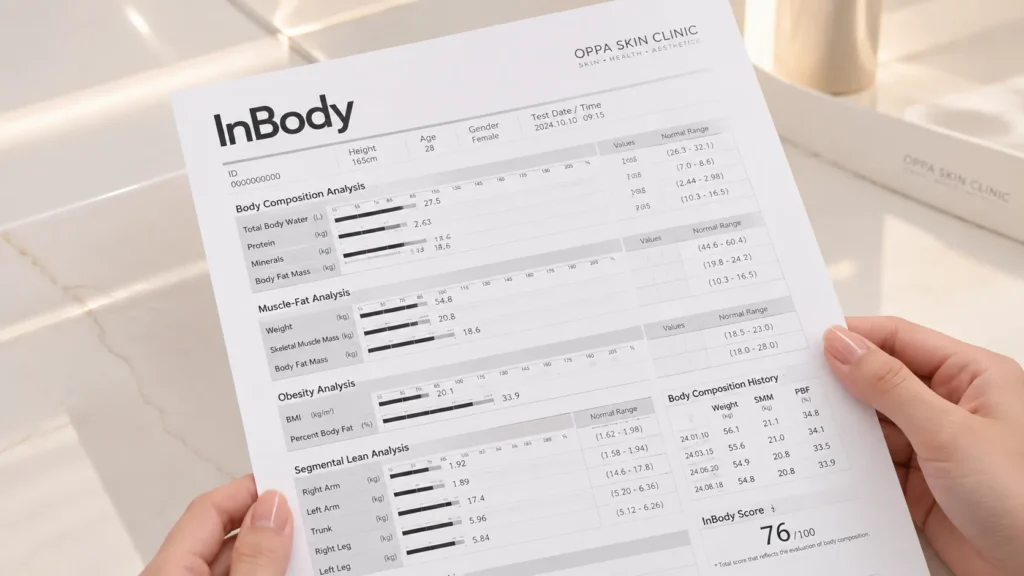
An InBody report may seem overwhelming at first, but understanding the key measurements makes the results easier to interpret. A doctor should always explain the results and assess them with you.
Weight and BMI
It’s a starting point for getting an overview, but it shouldn’t be used to judge health in isolation, because BMI doesn’t differentiate between weight from muscle and weight from fat.
Muscle mass
It’s important to consider whether your muscle mass is appropriate for your gender, age, and height, as muscle mass affects your metabolism in the long term.
Body fat mass and percentage of body fat
This helps assess how much of your body weight is fat, and should be considered in conjunction with visceral fat to evaluate overall health risks.
Distribution of muscle and fat in each area
It helps to see if the body is balanced between the left and right sides, and the upper and lower body, which is useful for those who want to plan their exercise routine or focus on specific areas.
Factors that can alter InBody results
Because the InBody device uses the principle of measurement through electrical resistance in the body, several factors can affect the accuracy of the results each time, including:
- Body fluid levels, such as dehydration or drinking too much water before a test.
- Eating or drinking shortly before the examination.
- Exercising vigorously before the examination.
- The time of day the test is taken, as body water levels can change throughout the day.
- Clothing or metal ornaments worn during the examination.
- In women, the menstrual cycle can also affect the amount of water in the body.
Preparation before the InBody test
Before an InBody test, aim to keep testing conditions as consistent as possible, especially when comparing changes over time. Food and fluid intake, exercise, and the distribution of water in your body can all affect the results. General preparation guidelines include:
- Take the test on an empty stomach, or avoid testing immediately after a meal.
- Use the restroom before the test to help keep testing conditions consistent.
- Avoid exercising before the examination, as it may temporarily alter blood circulation and fluid distribution in the body.
- Avoid hot baths, saunas, or activities that cause changes in body temperature before the examination.
- Remove your socks or stockings so that your soles can make direct contact with the device’s electrodes.
- During the test, stand still, follow the staff’s instructions on posture, and avoid unnecessary talking or movement.
- If multiple tests are needed to compare results, they should be performed at approximately the same time and under similar conditions each time.
How can the InBody machine be used to help with weight management planning?
The InBody machine is not just a basic measurement tool; it also provides crucial data that doctors use to plan personalized weight and body shape management strategies.
Tracking body composition in a weight management program
For individuals undergoing weight management under medical guidance, periodic InBody tests help determine whether weight changes are truly due to fat loss or if muscle mass is also being lost. This information is extremely useful for monitoring the progress of weight management programs under medical evaluation at OPPA SKIN CLINIC, such as the Fat Bomb Premium program or medically supervised weight control injection programs like the Mounjaro and Wegovy programs. All of these programs should be evaluated for suitability by a doctor before starting.
Assessing Body Composition Before Body Contouring
In addition to monitoring during the program, a pre-treatment InBody scan helps doctors see baseline body information, such as areas with more fat than others, or muscle balance in different parts of the body. This initial information is useful in determining the appropriate approach to body shaping for each individual.
Why does OPPA SKIN CLINIC perform a body composition analysis using the InBody machine before starting the program?
Body weight is only one piece of information in body composition assessment, as the numbers on the scale don’t accurately reflect fat and muscle mass. At OPPA SKIN CLINIC, a body composition analysis using an InBody machine before starting a program is therefore intended to collect baseline data for the doctor’s assessment and to monitor changes during treatment.
Provides information beyond body weight
Individuals with similar weight and height may have different fat and muscle ratios. Therefore, assessing body composition based solely on weight or BMI has limitations in accurately describing an individual's body composition. The InBody machine estimates body composition such as fat mass, fat percentage, muscle mass, and body water content. The results are approximate values for assessment purposes only and are not a diagnosis.
Supports individualized care planning
Doctors consider InBody results alongside BMI, waist circumference, medical history, eating habits, exercise, and your goals when planning appropriate care. The aim is to understand your individual body composition, rather than base decisions on a single number.
Establishes a baseline for monitoring changes
Results taken before a program establish a baseline for comparison with later tests, considering weight, fat mass, and muscle mass together. For example, when weight changes, the doctor can assess how fat and muscle mass are changing. Follow-up information helps the doctor review your care plan alongside your current health and habits. A single test does not determine the overall outcome. Results can vary with your physical condition and testing conditions, so follow the preparation instructions and have a doctor or relevant healthcare professional explain the findings in the context of your health.
InBody: Key Takeaways
The InBody machine provides a more detailed picture of body composition than simply looking at weight. It includes muscle mass, fat mass, water content, and its distribution throughout the body. This information is extremely useful for planning and monitoring health and fitness goals in collaboration with a doctor. However, InBody results should always be interpreted and considered by a specialist physician to ensure the data is used accurately and appropriately for each individual’s physical condition.
Frequently Asked Questions
How Long Does an InBody Test Take?
The actual measurement process with an InBody machine takes approximately 15 – 30 seconds, depending on the model. According to the manufacturer, some InBody models take about 15 seconds, while more detailed analysis models take around 30 seconds.
How Often Should I Have an InBody Test?
To track changes in body composition, it is recommended to have an InBody test approximately every 2 – 4 weeks. This aligns with the InBody manufacturer’s recommendations for those on a weight management program, exercise program, or managing conditions affecting body composition.
Can the InBody machine be used to diagnose diseases?
The InBody machine is a tool used to assess body composition for healthcare purposes only; it is not a medical device for diagnosing diseases. If you have any health concerns, you should consult a doctor for appropriate diagnosis.
Back to Articles