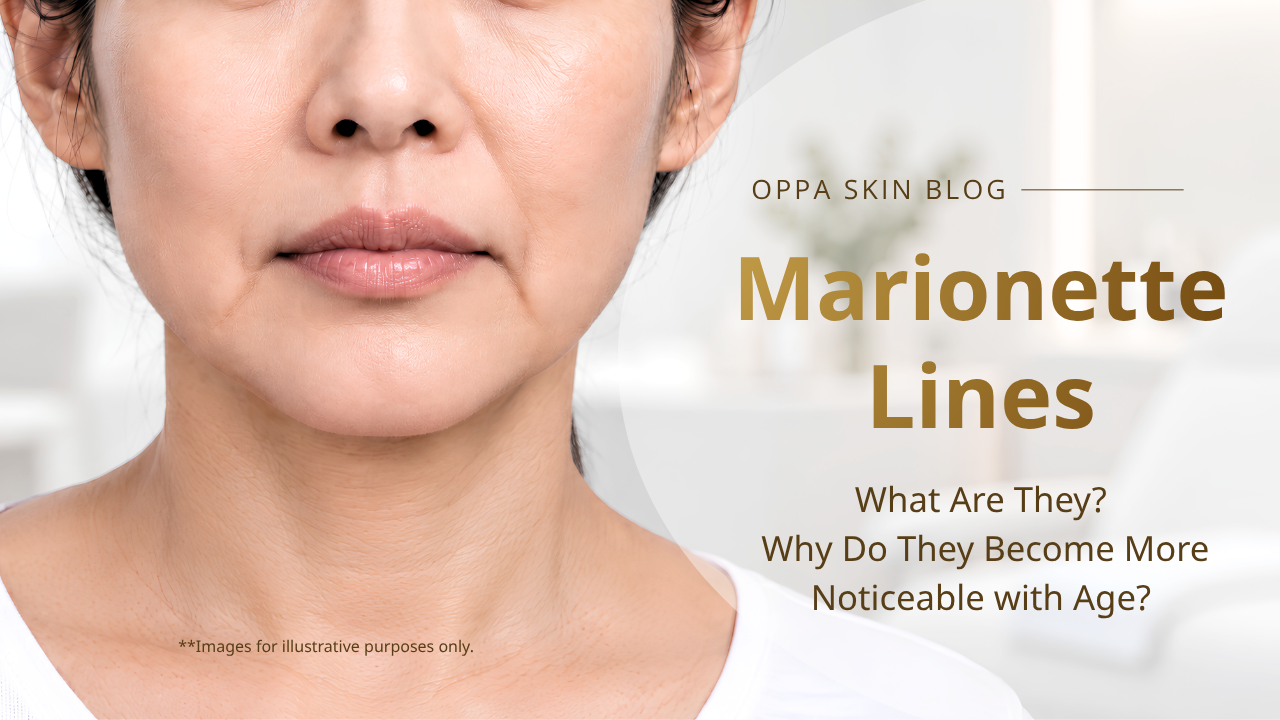
Marionette lines, or furrows extending from the corners of the mouth down to the jawline, are one of the most noticeable changes in the lower face as we age. They can make the corners of the mouth appear droopy, and the face look sad or tired, even when not expressing emotion. Marionette lines aren’t solely caused by wrinkles; they’re related to several factors, including collagen loss, decreased or shifted subcutaneous fat, changes in facial structure, and sagging of the lower cheeks. Therefore, treatment for marionette lines should depend on the individual’s cause. Some cases are primarily due to loss of volume, while others are accompanied by lower facial sagging. A preliminary facial assessment helps in choosing the most appropriate treatment approach.
What Are Marionette Lines?
Marionette lines are grooves or folds of skin that start at the corners of the mouth and extend down towards the chin or jawline. They are known as labiomandibular folds because their location resembles the lines around a marionette’s mouth. While these lines may only be noticeable when the mouth is moving or making facial expressions, as we age and the skin and underlying tissue structure change, they can become more visible even at rest. This is especially true for those with sagging corners of the mouth, drooping lower cheeks, or pre-jowl lines. Medically, marionette lines are not a disease but rather a structural change in the face that occurs with aging. They shouldn’t be treated as mere lines that need filling, as in some cases, the primary cause may be loss of volume, weakened supporting structures, or sagging of surrounding tissues.
What Causes Marionette Lines?

Based on the assessment of patients consulting about marionette lines, the main factors contributing to this condition can be summarized as follows, although each individual usually has more than one contributing factor.
Increasing age and collagen loss
Collagen and elastin are important structural proteins that hold the skin in place, maintaining its firmness and elasticity. As we age, the body naturally produces less collagen and elastin, generally starting from around age 25 and tending to decline more rapidly after the ages of 30-40. As the network supporting the skin around the corners of the mouth weakens, the skin begins to sag and deep creases form due to gravity.
Sagging Skin and Lower Cheeks
Sagging skin and tissue in the lower cheeks can create fullness beside the marionette lines, while some tissue remains anchored. The contrast between fuller and sunken areas makes the lines more noticeable. This involves tissue position and support, rather than the cheeks simply pressing repeatedly on the line.
Loss of volume and changes in facial structure
In addition to skin sagging, the volume of subcutaneous fat in the cheeks and part of the jawline also decreases with age. When the structure that once supported the upper skin layers loses volume, the area around the corners of the mouth lacks support, causing the skin to sink in and form deeper furrows rather than just shallow wrinkles. This is why some people’s marionette lines appear deeper, like hollows, rather than just fine lines.
Function of the muscles at the corner of the mouth
At the corners of the mouth, there is a muscle that pulls the corners of the mouth down (depressor anguli oris). This muscle works every time there is a facial expression, such as speaking, chewing, or expressing certain emotions. When this muscle works repeatedly over a long period of time, combined with the skin’s loss of elasticity with age, permanent folds form along the muscle’s movement. This is one of the mechanisms that makes marionette lines more prominent compared to wrinkles in other areas of the face.
Behaviors and factors that accelerate skin aging
Unprotected sun exposure and smoking are factors that contribute to skin aging. Significant weight changes can alter facial volume and increase sagging in some individuals. Addressing these habits is therefore part of overall skin care and appearance. Getting enough rest and hydration contributes to overall health, but it’s important to avoid expecting increased water intake to directly replenish tissue volume or correct structural wrinkles.
Marionette Lines vs. Nasolabial Folds: What Is the Difference?
Marionette lines and nasolabial folds are often confused because both occur in the lower part of the face. However, their locations and appearance differ, as shown in the table below.
| Feature | Marionette Lines | Nasolabial Folds |
|---|---|---|
| Location found | From the corner of the mouth down towards the side of the chin. | From the side of the nostril down towards the corner of the mouth. |
| Visible appearance | A groove or fold below the level of the corner of the mouth may be present with drooping corners of the mouth. | The crease between the cheek and the upper lip is often more visible when smiling. |
| Related factors | Skin and underlying tissues; sagging; loss of volume; supporting structure; and muscle function. | Midface structure, tissue volume and position, skin quality, and facial expressions. |
| What the doctor assesses | The grooves, corners of the mouth, chin, and surrounding tissues, both at rest and in motion. | The groove is associated with the fullness or sunkenness of the cheeks and the mid-face structure. |
| Care guidelines | Choose based on key factors; it's not necessary to fill in every groove. | Assess the fold and surrounding tissue before selecting treatment. |
How Do Doctors Assess the Depth of Marionette Lines?
Assessing marionette lines involves more than judging their depth. Doctors consider the lines alongside the surrounding skin and tissue and how the corners of the mouth move. Key points include:
- Clarity while the face is at rest: How visible are creases or lines when the face is not making any facial expression?
- Changes when the mouth moves: How do the grooves and corners of the mouth change when speaking or making facial expressions?
- Indentations and bulges around the groove: Are there areas of volume loss or sagging tissue surrounding the groove?
- Lower facial sagging: Assess the degree of drooping in the lower cheeks, jowls, and excess skin.
- Skin quality and facial proportions: Assess elasticity, as well as the appearance of the chin and jawline.
Marionette lines can be graded using reference photographs evaluated in research. However, depth alone should not determine the choice of procedure. Lines that look similarly deep may require different approaches, depending on the contributing factors.
How Do Marionette Lines Change Facial Appearance?
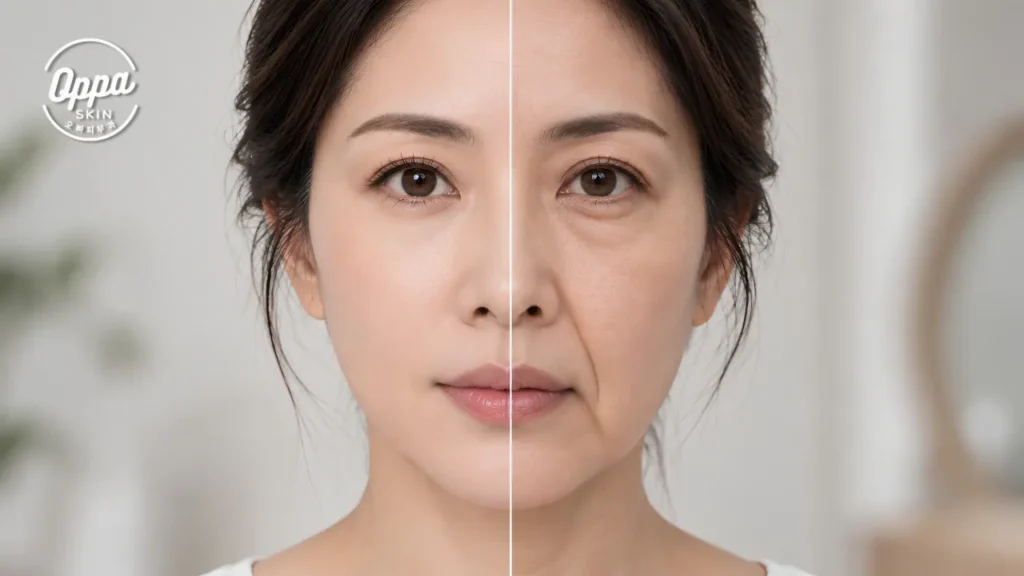
The marionette lines are located in a position that significantly affects the overall appearance of the lower face because they connect to the corners of the mouth and the jawline. When these folds become more prominent, they can alter facial expressions even when the person is not showing any emotion, and often affect the overall appearance of the face in several ways, as follows:
The corners of the mouth appear drooping
When the skin and tissue around the corners of the mouth sag, the corners of the mouth on both sides are often pulled downwards along the groove, causing the lip line that was slightly lifted in youth to become more sloping, even when not intentionally making any facial expression.
Your face looks sad or tired
The effect of drooping corners of the mouth and deeper furrows often makes a facial expression appear perpetually sad or tired, even if one doesn’t feel that way. This is one of the main reasons many people feel anxious and seek solutions for marionette lines, as it affects their self-confidence in daily life. However, this perception varies from person to person, and the appearance of marionette lines cannot be used to judge one’s mood or health.
A Less Firm Lower Face
Marionette lines often occur in conjunction with sagging of the lower cheeks and jawline, causing the once smooth facial contours to become less defined. The overall appearance of the lower face is therefore more saggy and less firm than before.
The grooves at the corners of the mouth become more visible
Over time, without proper care, marionette lines tend to become deeper and wider as collagen and volume are continuously lost. They become especially noticeable when smiling or talking, becoming the first area of attention drawn to the face.
Treatment Options for Marionette Lines
Since marionette lines are caused by a combination of factors, treatment approaches should be tailored to the primary cause and severity of each individual’s condition. Broadly speaking, some approaches can be considered as follows:
Skin care and lifestyle changes
The fundamental steps to slow down the degradation of collagen and elastin are protecting the skin from sun exposure by consistently applying sunscreen, along with drinking enough water, getting enough rest, quitting smoking, and consuming foods rich in antioxidants. These help delay skin aging from external factors. However, this approach is more suitable for slowing and preventing the aging process in its early stages than for dramatically reducing deep wrinkles.
Skin Tightening Program
For individuals with mild to moderate marionette lines along with sagging lower cheeks, a doctor may consider skin tightening technologies that use energy to stimulate collagen production in the deep layers of the skin. This helps to firm the lower cheeks, which is one of the causes of marionette lines. Examples include the Ultraformax program, which uses high-frequency ultrasound (HIFU) to deliver energy to the appropriate skin layers, and the XTherma program, which uses radio frequency (RF) technology to stimulate skin tightening in another way. The doctor will assess which technology is best suited to the degree of sagging and skin condition of each individual.
Restoring Volume with Dermal Fillers
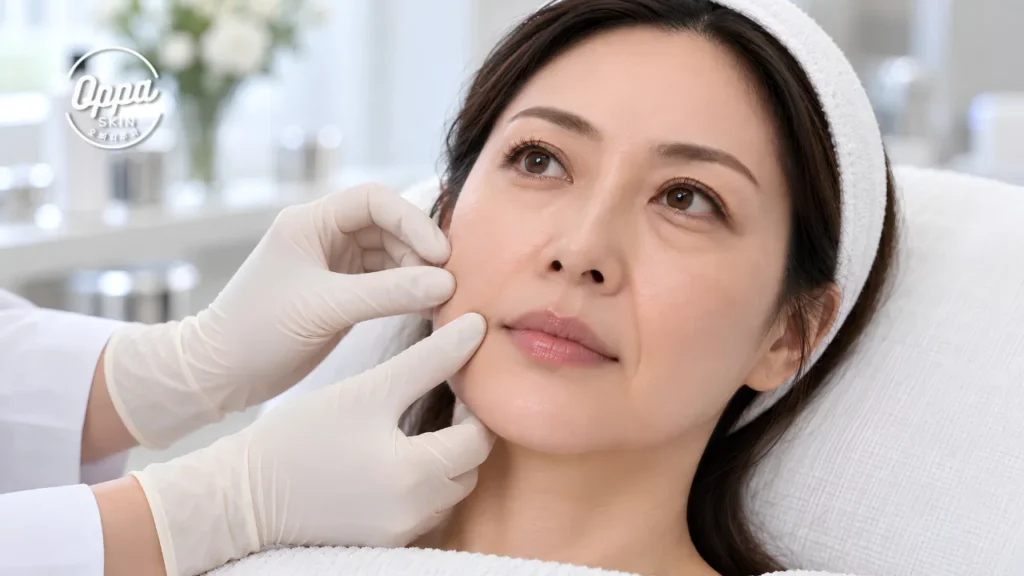
If there is a loss of volume or sunken areas associated with marionette lines, the doctor may consider a filler program to address the appropriate areas, evaluating the folds themselves, the tissue around the corners of the mouth, and the proportions of the chin. It is not necessary to inject directly into the folds in everyone. At OPPA SKIN CLINIC, our doctors will consider the type, amount, and location of filler based on tissue characteristics and treatment goals. If the primary problem is significant sagging, filler alone may not be sufficient, so it’s important to understand the limitations before making a decision.
Combining multiple approaches
In some cases, a doctor may consider combining skin tightening devices to address the root cause of lower cheek sagging with fillers to fill in deeper wrinkles. This aims for a more balanced and natural result than using only one method. Such a treatment plan always requires prior evaluation by a doctor.
Marionette Line Care at OPPA SKIN CLINIC
At OPPA SKIN CLINIC, we begin by assessing whether your primary concern is deep lines, drooping corners of the mouth, or sagging lower cheeks. The doctor will examine your face at rest and while moving your mouth, along with taking a detailed health history and information on previous procedures, to create a treatment plan tailored to your specific needs. If volume loss is a significant factor, the doctor will consider a filler program as appropriate. For those with accompanying tissue laxity, Ultraformax or XTherma programs may be considered, with clear goals for each method, not using the depth of the wrinkles as the sole criterion for selecting the program. Before starting treatment, the doctor will explain the expected results, limitations, side effects, and post-treatment care, including the need for follow-up. If more than one approach is needed, the rationale and sequence of care will be explained to provide the patient with the information to make an informed decision. Those concerned about marionette lines or sagging corners of the mouth can consult OPPA SKIN CLINIC to assess the best options for their facial condition and goals. Results vary depending on the method used and individual factors.
Marionette Lines: Key Takeaways
Marionette lines are caused by a combination of factors, including aging and collagen loss, sagging skin in the lower cheeks, loss of volume and changes in facial structure, muscle activity around the mouth, and lifestyle habits that accelerate wrinkle formation. Therefore, there is no one-size-fits-all solution for marionette lines. Skin care and lifestyle changes are fundamental steps in slowing down skin aging. However, for those with prominent marionette lines, consulting a doctor to assess the cause and depth before deciding on treatment will help choose the most appropriate and targeted approach, rather than relying solely on self-care.
Frequently Asked Questions
Can Marionette Lines Improve on Their Own?
Generally, marionette lines, caused by the loss of collagen, elastin, and volume with age, do not naturally fill in because they are a process of aging and deterioration of the skin’s structure. Skin care and lifestyle changes, such as sun protection and adequate hydration, can help slow down the rate at which these wrinkles deepen. However, if the marionette lines are already very prominent, additional medical treatment may be needed to stimulate skin firmness or fill in sunken areas.
At What Age Do Marionette Lines Appear?
There is no fixed age for this, as it involves facial structure, genetics, skin condition, and tissue changes. Some people notice it at a young age, while others see it later. Therefore, age alone should not be used to determine when to start treatment procedures.
Is injecting filler into marionette lines painful, and how long does the effect last?
The level of pain during filler injections varies from person to person, depending on sensitivity and the injection site. Generally, doctors may consider using local anesthesia to reduce discomfort during the procedure. The duration that filler remains in the skin also varies depending on the type of filler used, individual metabolism, and the injection site. Therefore, it is advisable to discuss these details directly with your doctor before making a decision.
I don’t want injections. Are there any ways to care for my marionette lines without injections?
For those who are not yet ready for filler injections, doctors may consider non-surgical skin tightening programs such as Ultraformax or XTherma, which focus on stimulating collagen production in the skin layers to help tighten the lower cheeks, one of the causes of marionette lines. This approach is generally more suitable for marionette lines that are in the early to moderate stages rather than very deep ones. The doctor will assess suitability on an individual basis.
Back to Articles