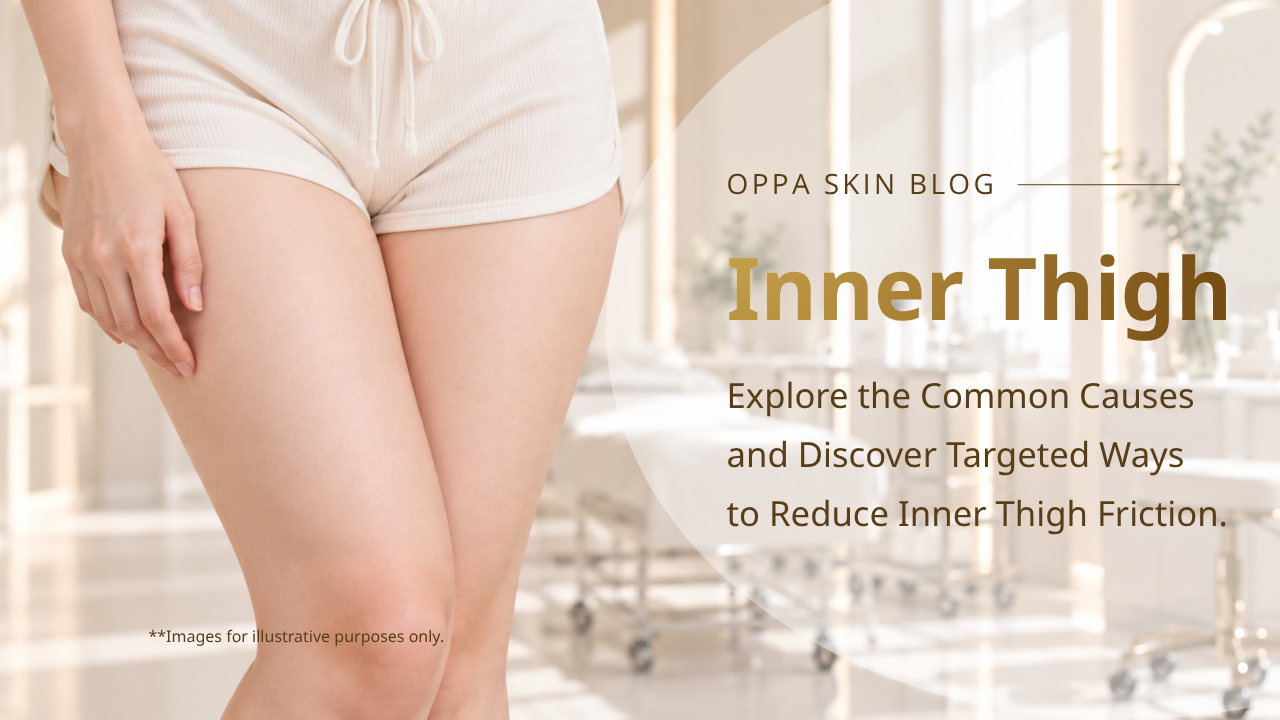
Inner thighs touching or rubbing together while walking or standing is often attributed solely to excess weight. Many people expect weight loss to resolve it, but several factors may contribute, including hip and thigh structure, fat distribution, muscle mass, genetics, and individual body shape. Repeated skin contact and friction can cause soreness, redness, irritation, abrasions, or darkening. Prepared by the OPPA SKIN CLINIC medical team, this article explains these causes and outlines ways to reduce friction and care for the inner thighs according to individual concerns.
What Does It Mean When Your Thighs Rub Together?
Thigh contact describes the inner thighs touching or rubbing against each other while standing, walking, or doing daily activities. It contrasts with a thigh gap, where a space remains between the inner thighs. Thigh contact occurs across ages, genders, and body types and does not necessarily indicate excess weight. It reflects a combination of pelvic structure, fat, muscle, and genetics. It is a common physical feature, not a disease or abnormality. However, some people experience chafing, irritation, or difficulty feeling comfortable in their clothing, which may lead them to seek care for this area.
Why Do the Inner Thighs Touch?
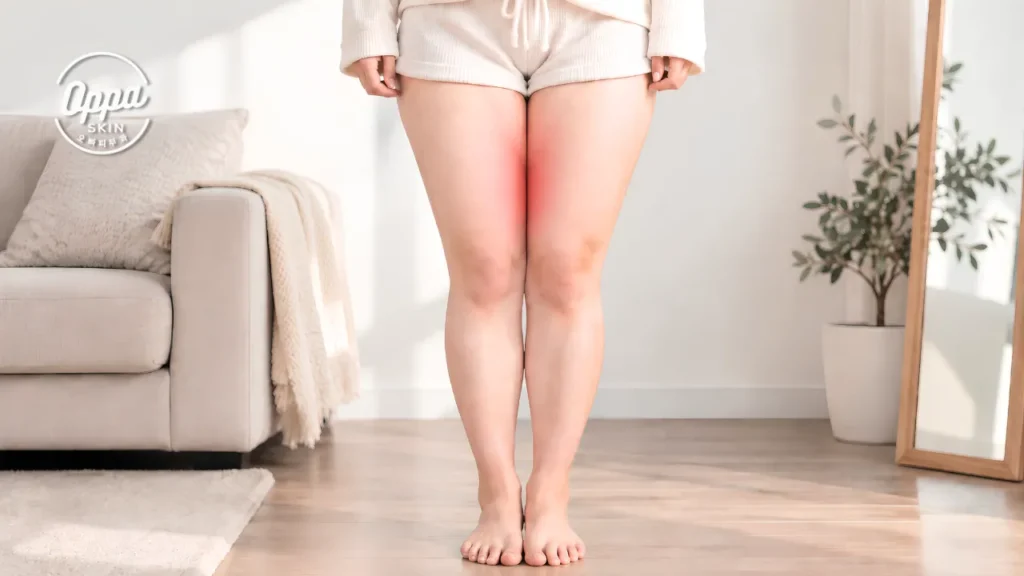
Thigh contact is not simply a matter of fat or weight. Several factors can contribute:
The structural characteristics of each person’s hips and thighs
Pelvic bone structure and femur angle are key factors determining how close the inner thighs are to each other. Generally, women have wider pelvises than men to accommodate childbirth, which may result in a greater inward angle of the thighs, making it easier for the inner thighs to touch. This is a matter of congenital body structure and is not directly related to body weight.
Fat accumulation in the inner thighs
Subcutaneous fat plays a part in determining thigh volume. The pattern of fat accumulation varies depending on genetics, hormones, and individual factors. Increased fat in the inner thigh area may cause the skin on both sides to come into contact more, but it cannot be concluded that all cases of thigh contact are due to excess fat.
Weight and body fat distribution
Overall body weight affects thigh contact in some people, but it’s not the only factor. Each person has a different fat distribution pattern. Some people gain weight and accumulate fat primarily in the abdomen, while others accumulate excess fat more in the thighs and hips. Therefore, people with the same body weight can have different thigh contact patterns depending on their individual fat distribution.
Thigh muscles and shape
The size and shape of the thigh muscles, including the inner thigh muscles or adductor muscles, contribute to thigh volume. People who train their muscles or play certain sports may have their thighs touching even without significant fat. This does not necessarily mean muscle abnormalities or the need for muscle reduction, and fat reduction procedures should not be chosen without an evaluation of the related tissues.
Genetics and individual physiology
Genetics influences body structure and fat distribution, so family members may have similar proportions. This helps explain why people with similar weights or activity levels can have different thigh shapes. However, a genetic tendency for the thighs to touch does not mean that a cosmetic procedure is always necessary.
Thighs Touching vs. Thigh Chafing: What Is the Difference?
People often use “thighs touching” and “thigh chafing” interchangeably, but they describe different aspects of the issue. Thighs touching refers to the physical shape and proportions that bring the inner thighs together. Chafing refers to irritation, stinging, redness, or abrasions caused by repeated skin friction. Thigh contact can be a structural cause, while chafing is a possible result when combined with factors such as sweat, moisture, or prolonged movement. Not everyone whose thighs touch experiences chafing, and chafing can occur even without pronounced thigh contact.
Why Does Thigh Friction Cause Stinging, Redness, or Abrasions?

If your thighs touch and the skin becomes sore, red, or grazed, the following factors may be involved:
Skin friction on the inner thigh
When two sets of skin repeatedly come into contact and move in opposite directions, the friction created irritates the outer layer of skin. If this friction continues for a long time without protection, the skin may become red, sore, or develop small abrasions, especially in areas with thin and sensitive skin such as the inner thighs.
Sweat and dampness
In hot weather or during exercise, the inner thighs tend to accumulate sweat and have poor ventilation. This moisture buildup causes the skin to swell slightly, become softer, and rub more easily than dry skin. Furthermore, this accumulated moisture increases the risk of skin irritation and inflammation.
Clothing that increases friction
Rough fabrics, seams that press or rub against the skin, and clothing that is too tight or too loose and causes repeated friction can increase irritation. Clothing that exposes the thighs in direct contact may also cause irritation in some people during prolonged walking. Therefore, choose clothing based on the activity and skin comfort.
Walking, running, or exercising for extended periods of time
Activities that involve repetitive leg movements for extended periods, such as long-distance walking, running, or leg-heavy exercises, increase the frequency of friction between the thighs. The longer the activity lasts, the greater the chance of skin irritation or chafing, especially in individuals who already have pronounced thigh contact.
How to care for chafing or irritation when your thighs rub together
The goal of friction-damaged skin care is to reduce friction and allow the skin to recover. This can begin with the following approaches:
- Choose well-fitting clothing: Use smooth-fabric leggings or workout pants that create a barrier between your thighs and avoid seams that rub against the same area.
- Manage sweat and moisture: Change sweat-soaked clothing and gently pat skin dry.
- Preventing chafing: Apply a thin layer of petroleum jelly to sensitive skin areas before walking or exercising. Discontinue use if irritation occurs.
- Rest your skin when it starts to sting: Reduce rubbing on the same area and avoid scrubbing or exfoliating the inflamed skin.
Choosing the right clothing and using products to reduce friction is a guideline recommended by the American Academy of Dermatology to prevent chafing and blisters. If symptoms do not improve, recur frequently, or develop sores, swelling that spreads, severe pain, or pus, consult a doctor to assess the cause and treat the skin before considering any procedures in that area.
Ways to Address Thigh Contact and Friction
The approach to management depends on whether thigh contact is related to fat, structure, muscle, or a combination of factors. The goal may be to reduce excess fat, increase strength, or alleviate friction, without necessarily aiming to create a thigh gap.
Adjust your diet and control your energy intake appropriately
For those with thigh contact related to overall body weight, controlling daily calorie intake to meet the body’s needs, along with choosing a nutritionally balanced diet, is a fundamental starting point to reduce overall body fat. This may also result in a reduction of fat in the thigh area in some individuals.
Exercise to reduce overall body fat
Regular aerobic exercise, such as brisk walking, running, cycling, or swimming, helps burn calories and reduce overall body fat. However, it’s important to understand that the body cannot selectively reduce fat in specific areas through exercise alone (spot reduction). Therefore, reducing thigh fat usually occurs simultaneously with reducing fat in other parts of the body.
Strengthen the Thigh and Hip Muscles
Exercises that target the thigh and hip muscles, such as squats, lunges, or glute bridges, can help tone and strengthen these muscles, potentially leading to a more toned and slender overall thigh appearance, even though they cannot alter congenital pelvic structure.
Medical Options for Localized Inner Thigh Fat
For those concerned about inner thigh fat, a doctor will first assess whether the fullness of the thighs is primarily due to subcutaneous fat or also involves structure and muscle. The fact that the thighs still touch after dietary and exercise adjustments does not necessarily mean that a cosmetic procedure is always necessary.
If you have localized fat deposits and are considering OPPA SKIN CLINIC’s services, the doctor will assess the suitability of the Fat Bomb Premium program based on the products or methods used, including its suitability for the inner thigh area. The doctor will explain the goals, limitations, and potential side effects before you make a decision.
In cases with accompanying skin sagging, doctors may consider Ultraformax or XTherma programs, where the technology and applicators are suitable for the area, aiming for skin tightening, which differs from fat treatment. The choice of body contouring device must consider the indications and application site of each model.
Fat reduction and skin tightening do not change bone structure and cannot guarantee a thigh gap or eliminate all friction. If the skin is irritated, chafing should also be addressed.
Approach to treating thigh fat accumulation at OPPA SKIN CLINIC
At OPPA SKIN CLINIC, we begin by listening to our clients’ concerns, whether it’s inner thigh fat, sagging skin, or chafing while walking. This helps separate body shape goals from skin issues, and is incorporated into the doctor’s assessment. The doctor will take a detailed history of weight changes, daily activities, and any symptoms, along with an examination of the inner thigh tissue, skin characteristics, and overall proportions. If fat accumulation is identified as the primary factor, treatment options such as the Fat Bomb Premium program will be considered, tailored to the specific needs of that area, along with dietary and physical activity advice. For those with sagging skin, the doctor will assess the need for additional skin care before selecting programs like Ultraformax or XTherma, based on the capabilities of the equipment used. Not all patients require multiple programs. Those with skin inflammation or chafing wounds should have their skin problems treated first. Before starting any program, the doctor will explain the expected results, limitations, side effects, and post-treatment care to help clients make informed decisions. Individuals concerned about inner thigh fat or chafing can consult with OPPA SKIN CLINIC to assess the most suitable approach for their specific problems and goals. Results vary depending on the method used and individual factors.
Thigh Contact and Chafing: Key Takeaways
Thigh contact can result from pelvic and thigh structure, inner thigh fat, body weight and fat distribution, muscle mass, and genetics. There is no single approach that works for everyone. Diet and exercise are fundamental steps for reducing overall body fat. If localized fat or structural factors are also involved, a doctor’s assessment can help identify the cause and guide more appropriate, targeted care than self-management alone.
Frequently Asked Questions
Is Thigh Contact Always Caused by Excess Weight?
Not always. Body weight is only one of many factors related to thigh contact. Thigh chafing can also result from congenital pelvic bone structure, greater thigh muscle mass, or a genetic predisposition to easily accumulate fat in the thigh area. Therefore, even people with a normal weight can still have thigh contact.
Which exercises help to tone the inner thighs?
Lower-body exercises such as squats, lunges, and glute bridges help strengthen the thighs and hips. Squeezing a ball between the knees is an example of an exercise for the hip adductors. Choose movements you can perform correctly and without pain. Muscle training does not guarantee less inner thigh fat or a wider gap between the legs.
Can Inner Thigh Fat Be Reduced in a Specific Area?
Physiologically, the body loses fat from multiple areas rather than only from the area being exercised. Medical procedures, however, may target localized fat deposits. One option is the Fat Bomb Premium program at OPPA SKIN CLINIC, where a doctor assesses the amount of fat and the suitability of the inner thigh area before planning treatment. If fat has decreased but the skin remains loose, the doctor may consider additional skin tightening with Ultraformax or XTherma, depending on individual needs.
Can chafing cause dark inner thighs?
Thigh chafing can cause inner thighs to darken in some people, especially when the skin in that area repeatedly rubs against each other, causing irritation or inflammation. As the skin recovers, darkening may occur, also known as post-inflammatory hyperpigmentation (PIH). Besides friction, sweat, moisture, tight clothing, and prolonged walking or exercise can further irritate the skin in this area and increase the likelihood of darkening. However, dark spots are not always caused by friction. If the skin thickens, changes in appearance, or is accompanied by other abnormalities, you should consult a doctor to evaluate for other causes, such as hyperpigmentation or acanthosis nigricans.
Back to Articles